
Zinn Hub vs Fiverr

Zinn Hub's main competitor is Fiverr. This is how Zinn Hub compares the two.
In Zinn Hub's own words.
Fiverr is the bigger and longer-established gig marketplace, while Zinn Hub is the newer one, shaped around lower fees and translation. Fiverr sellers hand over 20% of each order, and buyers add a service fee. Zinn Hub puts no platform fee on buyers, lets sellers keep their first $500, and translates listings, chat and calls in 46 languages.
Where Zinn Hub stands out

- Buyers are not charged any platform fee.
- A seller's first $500 is theirs in full, at 100%.
- Past that point the cut is 8%, dropping to 7% for Agency.
- Bidding costs nothing, and no purchase is needed beforehand.
- Listings, chat, reviews and text inside images are translated in both directions across 46 languages.
- Calls happen live, with either captions or a translated voice that speaks.
- Zinn Hub does not add a payout fee, and every listing accepts crypto.
- Freelancers must pass an identity check and a skill check prior to listing.
Where Fiverr is strong
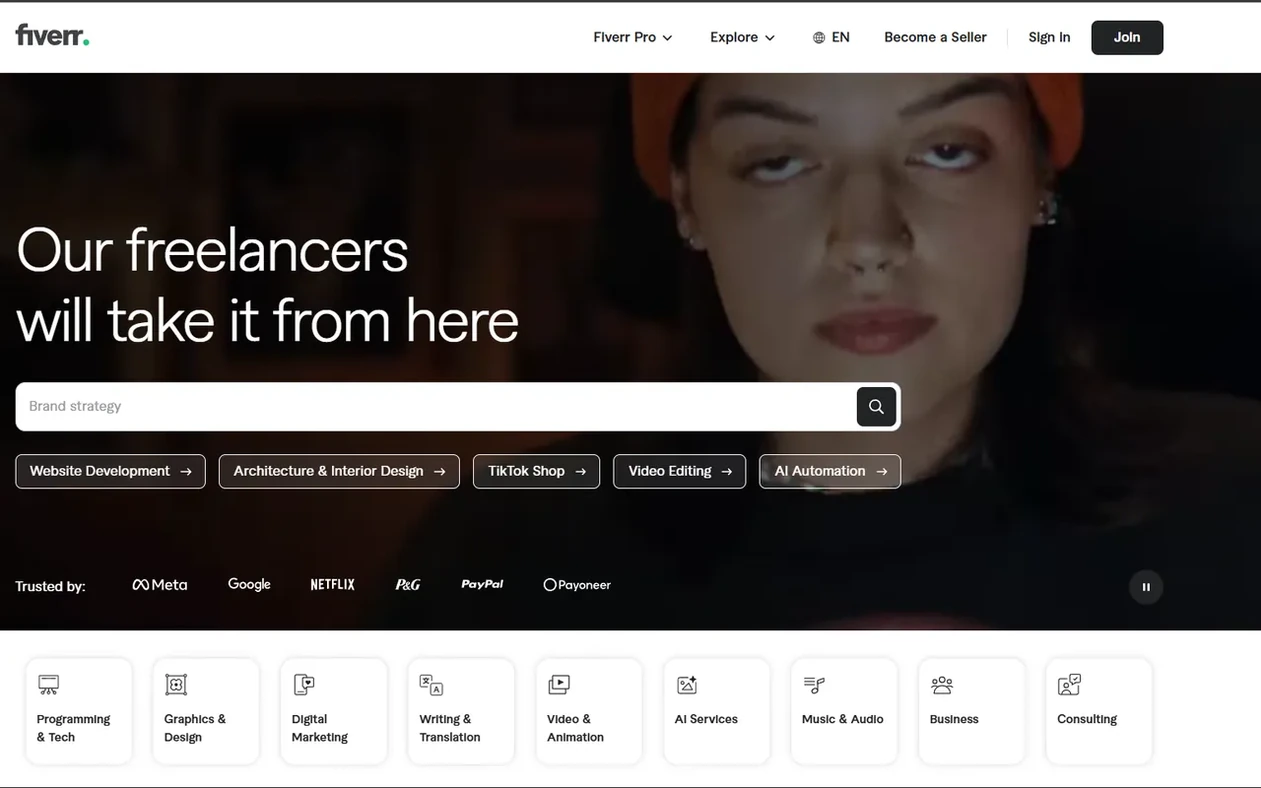
- It is a long-established platform.
- It holds a larger history of orders and reviews.
Differences
- Fiverr removes 20% from the seller on each order, whereas Zinn Hub begins at 0% for the first $500 and later drops to 8%.
- Buyers on Fiverr pay an extra service fee; buyers on Zinn Hub pay nothing.
- Fiverr puts English first, while Zinn Hub translates listings, chat, reviews and calls in 46 languages.
- Fiverr is a shop for gigs, but Zinn Hub also offers project briefs, a directory and live calls.
- Withdrawing on Fiverr can cost money, while Zinn Hub adds no payout fee and accepts crypto on every listing.
- Fiverr is the older site and carries more past orders and reviews.
- Zinn Hub examines identity and skill before any freelancer is allowed to list.
- Fiverr asks you to pay for being on an aged platform; Zinn Hub lets you keep more and removes language as a barrier.